




Trusted PPC Management Company
A PPC management company’s job isn’t just launching ads — it’s managing the system underneath them: keyword targeting, bidding strategy, landing page alignment, and conversion tracking, treated as one connected process rather than isolated tasks handled in different silos by different people.
Our process follows five stages: research and competitive analysis, campaign planning around clear objectives, implementation with proper conversion tracking installed from day one, continuous monitoring and bid refinement, and transparent reporting that identifies where to scale next. Campaigns improve through iteration, not a one-time setup — the accounts that perform best are the ones actively managed weekly, not checked in on monthly and left to run on autopilot.
Why Our Paid Search Marketing Services
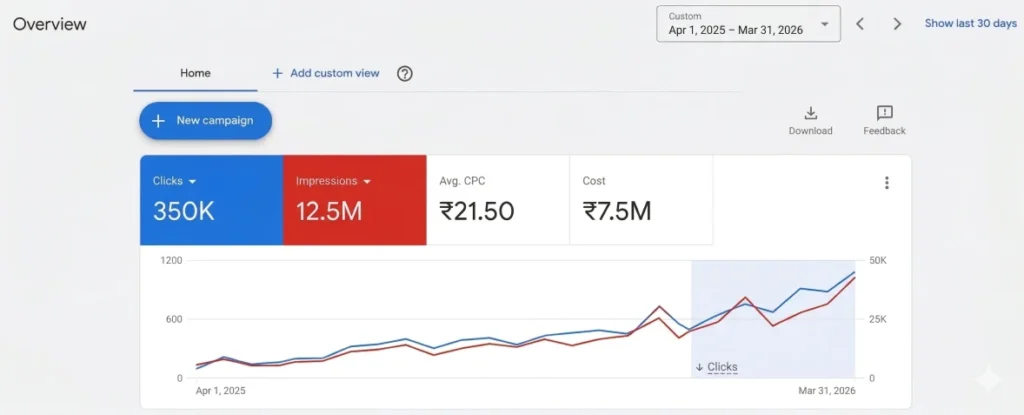
Paid search — ads tied directly to what someone typed into Google — remains the highest-intent form of PPC, because the user is actively searching for a solution the moment your ad appears. Pixel AI Marketing paid search work starts with intent-mapping keywords by commercial readiness: broad research terms, comparison-stage searches, and ready-to-buy queries all need different ad copy and different landing pages, not one generic page for every keyword.
Search campaigns are monitored against cost-per-acquisition and return on ad spend, not just click volume, because traffic that doesn’t convert is the most common way ad budget gets wasted quietly.
Paid Social Media Advertising Services
Paid social works differently from search — instead of capturing existing demand, it interrupts a scroll to create demand a user wasn’t actively searching for yet. That means creative does more of the work than keywords do: the first two seconds of an ad determine whether it gets seen or skipped.
Our paid social campaigns are built around audience segmentation, creative testing across multiple formats, and full-funnel structure — awareness ads for cold audiences, retargeting for people who’ve already engaged — rather than running one ad set to everyone and hoping the algorithm sorts it out.
Facebook Ads Management Services
Facebook’s advertising system rewards accounts with clean structure and enough conversion data to optimize against. Our Facebook Ads management starts with proper pixel and conversion API setup, since incomplete tracking is one of the most common reasons campaigns underperform before they’ve even really started running.
From there, we run structured creative testing — multiple ad variations, audience segments, and placements — reviewed weekly, with budget shifted toward what’s actually converting rather than left evenly split across underperforming variations out of habit.
Instagram Ads Management Services
Instagram campaigns run through the same ad infrastructure as Facebook but perform best with content built specifically for how people use the platform — visually led, fast-paced, and native to Stories and Reels rather than repurposed static banners. We build creative for Instagram’s actual formats first, rather than treating it as a secondary placement for Facebook-first ads.
Targeting and budget decisions are made per platform, not assumed to transfer directly, since audience behavior and cost-per-result can differ meaningfully between the two even within the same ad account.
What’s the Difference Between PPC and Paid Social Advertising?
PPC (paid search) targets people already searching for a solution — it captures existing demand. Paid social targets people based on interests and behavior, showing up before they’ve started searching — it creates demand. Most businesses need both, but not in equal measure at every stage: paid search tends to convert faster because intent is already established, while paid social builds the audience and brand familiarity that make paid search perform even better over time as more people recognize the brand before they search for it.
The right mix depends on sales cycle length, budget, and how well-known your brand already is — a decision we make with clients during strategy, not assumed before it based on a generic industry rule of thumb.