

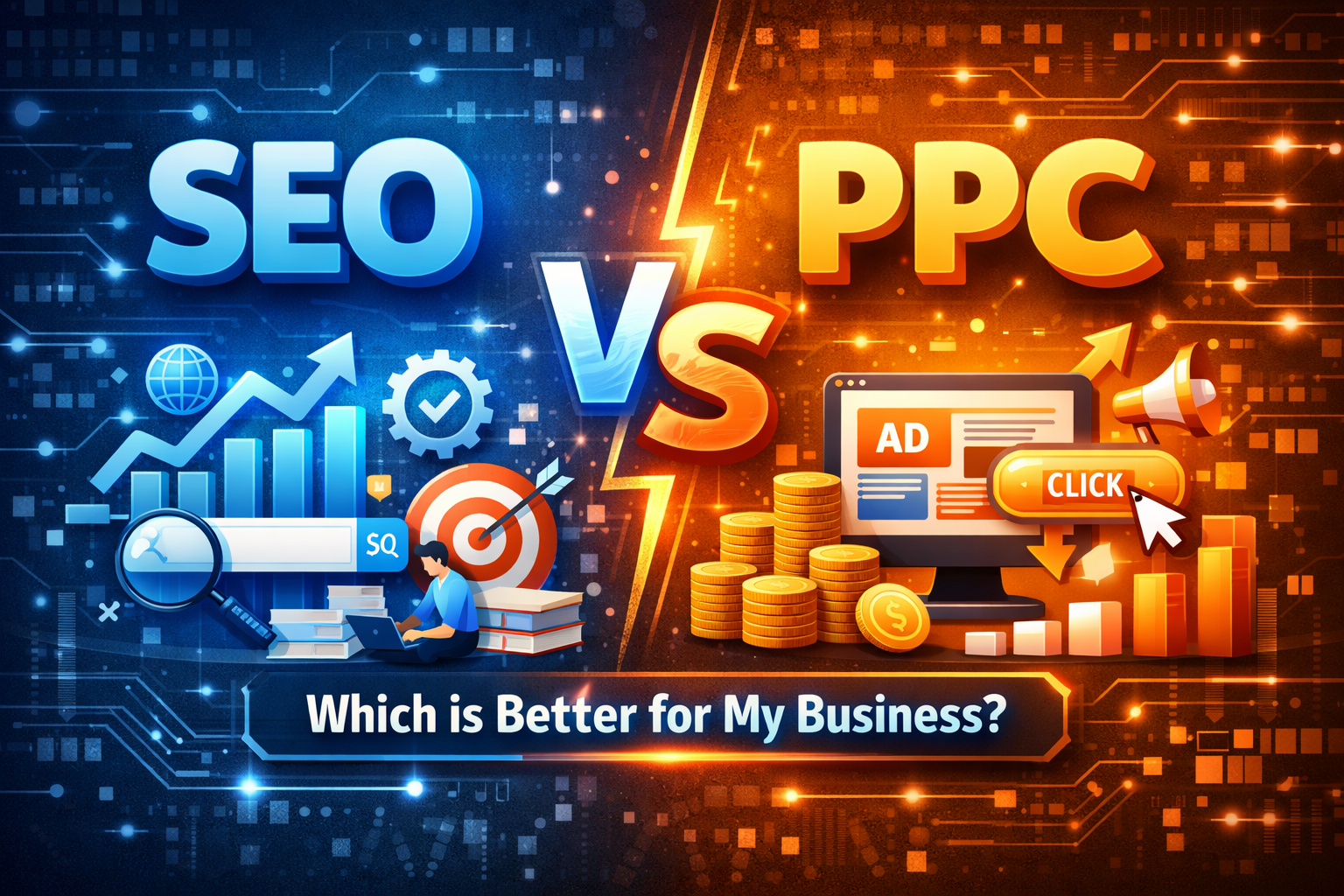
Business owners face a critical decision when building their online presence: invest in search engine optimization or pay-per-click advertising. Both strategies drive website traffic and generate leads, but they work differently and deliver results at varying speeds and costs.
This guide is designed for business owners, marketing managers, and entrepreneurs who need to choose between SEO and PPC or determine the right mix of both strategies. Companies working with a professional SEO agency or considering Google Ads services will find actionable insights to make informed decisions about their digital marketing investments.
The analysis covers three essential areas that impact strategy selection. First, the cost structures and budget requirements differ significantly between organic search optimization and paid advertising campaigns. Second, timeline expectations vary dramatically—SEO builds momentum over months while PPC can generate immediate traffic. Finally, the level of control and flexibility each approach offers affects how quickly businesses can adapt their marketing efforts to changing market conditions and business goals.
Understanding SEO and PPC Fundamentals
What SEO means for your business visibility
Search Engine Optimization (SEO) serves as the foundation for long-term digital visibility and organic growth. When businesses invest in SEO, they’re essentially building a sustainable online presence that attracts customers naturally through search engines. This organic approach focuses on creating valuable content, optimizing website structure, and earning credibility through authentic link-building strategies.
SEO operates by improving website rankings for relevant search terms that potential customers use when looking for products or services. Unlike paid advertising, organic search results carry inherent trust and credibility. Studies consistently show that users click on organic results more frequently than paid advertisements, viewing them as more trustworthy and relevant to their needs.
The beauty of SEO lies in its compound effect. Each piece of optimized content, every technical improvement, and all relationship-building efforts accumulate over time. A well-executed SEO strategy creates multiple touchpoints where customers can discover the business, from blog posts answering specific questions to service pages ranking for commercial keywords. Working with a Professional SEO Agency can accelerate these results by bringing specialized expertise and proven methodologies to the optimization process.
How PPC delivers immediate traffic results
Pay-Per-Click (PPC) advertising offers businesses the ability to generate instant visibility and traffic. The moment a campaign launches, advertisements appear in search results, social media feeds, or display networks, immediately putting the business in front of potential customers. This immediacy makes PPC particularly valuable for businesses needing quick results or promoting time-sensitive offers.
PPC platforms provide precise targeting capabilities that allow businesses to reach specific demographics, geographic locations, and user behaviors. Advanced audience segmentation ensures advertisements reach the most qualified prospects, maximizing the return on advertising spend. Real-time performance tracking enables instant campaign adjustments, optimizing for better results throughout the day.
The scalability of PPC campaigns presents another significant advantage. Businesses can quickly increase or decrease spending based on performance metrics, seasonal demands, or budget availability. Professional Google Ads Services can help maximize this flexibility by implementing sophisticated bidding strategies, audience targeting, and ad optimization techniques that improve campaign performance and reduce cost-per-acquisition.
Key differences in how each strategy works
The fundamental operational differences between SEO and PPC create distinct advantages for different business scenarios. SEO builds authority and trust gradually through content creation, technical optimization, and relationship building. This approach requires patience but creates lasting value that continues generating results even when active optimization efforts decrease.
PPC operates on immediate gratification principles where visibility directly correlates with budget allocation. Campaigns can launch within hours and generate traffic instantly, but results stop the moment spending ceases. This model provides complete control over messaging, timing, and budget allocation, making it ideal for testing market responses or promoting specific offerings.
| Aspect | SEO | PPC |
|---|---|---|
| Speed of Results | 3-6 months | Immediate |
| Cost Structure | Ongoing investment | Pay-per-click |
| Longevity | Long-term benefits | Temporary visibility |
| Control Level | Limited control | Complete control |
| Trust Factor | High credibility | Lower initial trust |
Investment requirements for both approaches
SEO investment typically involves consistent monthly commitments for content creation, technical optimization, and link building activities. Businesses usually allocate between $2,000-$10,000 monthly for comprehensive SEO services, depending on market competition and business size. This investment covers keyword research, content development, technical audits, and ongoing optimization efforts.
PPC requires immediate budget allocation for ad spend plus management fees. Daily budgets can range from $50 to $5,000 or more, depending on industry competition and target market size. Management fees typically run 10-20% of total ad spend, though working with specialized agencies often provides better results through advanced optimization techniques.
The investment timeline differs significantly between approaches. SEO requires sustained commitment over 12-24 months to see substantial results, while PPC can demonstrate immediate return on investment within days or weeks. Smart businesses often combine both approaches, using PPC for immediate results while building long-term SEO foundations for sustainable growth.
Cost Analysis and Budget Considerations
SEO Long-term Investment Benefits
Search engine optimization operates fundamentally differently from paid advertising when budget allocation comes into play. The initial investment in SEO typically covers content creation, technical optimization, and ongoing strategy refinement. Unlike paid campaigns where traffic stops immediately when budgets run dry, SEO creates compounding returns over time.
The beauty of SEO lies in its snowball effect. Content published today continues generating organic traffic months or even years later without additional per-click costs. This creates an asset-building approach where each piece of optimized content contributes to long-term visibility. Companies often see their organic traffic steadily climb as domain authority builds and search engines recognize the website as a trusted resource.
Budget predictability becomes another significant advantage. Once the initial SEO foundation is established, monthly investments remain relatively stable. Content creation, technical maintenance, and strategic adjustments require consistent but manageable budgets. This predictability helps businesses plan long-term marketing expenses without worrying about fluctuating click costs or competitive bidding wars.
Professional SEO agencies typically structure pricing around retainer models, making monthly expenses predictable while building sustainable organic growth. The return on investment compounds as organic rankings improve, creating scenarios where businesses receive exponentially more traffic without proportional increases in spending.

PPC Immediate Cost Implications
Pay-per-click advertising demands continuous financial commitment to maintain visibility. Every visitor costs money, and traffic disappears the moment budgets are exhausted. This creates an immediate relationship between spending and results, making budget management critical for sustained campaigns.
Click costs vary dramatically across industries and keywords. Competitive sectors like legal services, insurance, or financial planning often see cost-per-click rates exceeding $50 for high-intent keywords. Meanwhile, niche B2B services might achieve quality clicks for $5-10. Understanding these cost dynamics helps businesses set realistic expectations and allocate appropriate budgets.
Google Ads services require careful monitoring to prevent budget overruns. Daily spending limits provide some control, but highly competitive keywords can exhaust budgets quickly during peak hours. Successful PPC campaigns often need 20-30% buffer budgets to account for seasonal fluctuations and competitive changes.
The immediate nature of PPC results comes with immediate financial pressure. Businesses must generate conversions quickly enough to justify ongoing advertising spend. This creates urgency around optimization but also provides fast feedback loops for budget allocation decisions.
Hidden Costs You Need to Factor In
SEO hidden costs often catch businesses off guard. Technical website improvements, mobile optimization, and site speed enhancements frequently require additional development work. Content creation demands ongoing investment in writing, design, and multimedia production. Link building campaigns may require outreach tools, relationship management, and sometimes paid placements on relevant industry publications.
Tool subscriptions add up quickly in SEO. Analytics platforms, keyword research tools, rank tracking software, and competitor analysis solutions can easily cost $200-500 monthly. Professional SEO projects also require regular audits, strategy adjustments, and performance reporting that consume additional resources.
PPC campaigns carry their own hidden expenses. Landing page creation and optimization often require separate budgets for design and development. A/B testing different ad variations and landing pages increases both creative costs and management time. Campaign management fees typically add 15-20% to advertising budgets when working with agencies or consultants.
Conversion tracking setup, remarketing pixel installation, and integration with customer relationship management systems often require technical expertise. These implementation costs can range from hundreds to thousands of dollars depending on website complexity and existing infrastructure.
Both strategies benefit from professional management, whether through agencies or in-house specialists. Salary costs for experienced digital marketers or agency retainers represent significant ongoing investments that businesses must factor into total marketing budgets.
Timeline and Results Expectations
SEO Gradual Growth Trajectory
SEO results develop slowly through consistent optimization efforts. Most websites see initial ranking improvements within 3-6 months, with significant traffic gains typically emerging after 6-12 months. The gradual nature stems from how search engines crawl, index, and evaluate website authority over time. Rankings compound as content quality improves and backlinks accumulate.
PPC Instant Visibility Advantages
Google Ads Services deliver immediate traffic once campaigns launch. Ads appear within hours of setup, generating clicks and conversions on day one. This instant visibility proves valuable for new product launches, seasonal promotions, or competitive market entry. Businesses can test messaging, target audiences, and generate leads while longer-term SEO strategies develop momentum.

Sustainable Results Comparison
| Strategy | Sustainability | Long-term Value | Cost Dependency |
|---|---|---|---|
| SEO | High | Compounds over time | Low ongoing costs |
| PPC | Low | Stops when budget ends | High ongoing costs |
SEO builds lasting organic visibility that continues generating traffic without ongoing ad spend. PPC provides consistent results only while actively funded. Professional SEO Agency partnerships create sustainable foundations that appreciate in value, while PPC campaigns require continuous investment to maintain visibility and traffic flow.
When to Expect ROI from Each Strategy
PPC campaigns often show positive ROI within weeks when properly optimized, making budget allocation straightforward. SEO investments typically break even between months 6-18, depending on competition levels and implementation quality. Early SEO wins include improved website structure, better user experience, and enhanced brand credibility. Long-term SEO ROI significantly exceeds PPC as organic rankings strengthen and compound without proportional cost increases.
Control and Flexibility Factors
SEO Organic Ranking Limitations
SEO operates within Google’s algorithm constraints, making instant adjustments challenging. Organic rankings depend on crawling schedules, competition levels, and algorithm updates beyond direct control.
PPC Campaign Control Advantages
Google Ads Services provide immediate control over targeting, messaging, and budget allocation. Campaigns launch instantly with precise audience segmentation, ad scheduling, and geographic targeting capabilities that deliver measurable results.
Ability to Pivot and Adjust Strategies
PPC allows real-time strategy modifications based on performance data. Budget reallocation, keyword adjustments, and creative testing happen instantly, while SEO changes require weeks or months to show impact through organic search results.
Industry and Business Type Considerations
B2B versus B2C effectiveness differences
B2B companies typically see stronger long-term results with SEO strategies since decision-makers research extensively before purchasing. Professional SEO Agency services excel at targeting industry-specific keywords that reach qualified leads during their research phase. B2C businesses often benefit from immediate PPC campaigns that capture impulse purchases and time-sensitive offers through Google Ads Services.
Local business optimization strategies
Local businesses should prioritize SEO for “near me” searches and Google My Business optimization to dominate local search results. PPC campaigns work best for time-sensitive promotions, seasonal services, and competing against larger national brands. Combining both approaches helps capture customers searching for immediate solutions while building long-term local authority.
E-commerce specific advantages
E-commerce platforms gain significant value from SEO through product page optimization and category rankings that drive consistent organic traffic. PPC provides immediate visibility for new product launches, seasonal sales, and competitive keyword targeting. Shopping ads through Google Ads Services deliver high-intent traffic directly to product pages with visual appeal.
Service-based business recommendations
Service businesses benefit from SEO’s ability to demonstrate expertise through content marketing and establish trust with potential clients. PPC campaigns effectively target urgent service needs like emergency repairs or immediate consultations. Professional SEO Agency expertise becomes valuable for creating content that showcases credentials and builds authority in specialized service sectors.
Creating Your Integrated Marketing Strategy
Combining SEO and PPC for maximum impact
The most effective digital marketing approach leverages both organic search and paid advertising to create comprehensive market coverage. While SEO builds long-term authority and brand presence, PPC delivers immediate visibility and targeted traffic. This dual strategy allows businesses to dominate search results pages, capture traffic at different funnel stages, and maintain competitive positioning. Successful companies often work with a Professional SEO Agency for organic growth while simultaneously running Google Ads Services to maximize their search presence and accelerate results.
Budget allocation recommendations
Smart budget distribution typically allocates 60-70% toward long-term SEO investments and 30-40% for immediate PPC campaigns, though ratios vary based on business maturity and market competition. New businesses may initially weight PPC higher for quick market entry, while established companies often prioritize SEO for sustained growth. Seasonal businesses benefit from flexible allocation, increasing PPC spending during peak periods while maintaining consistent SEO investment year-round.
Measuring success across both channels
Effective measurement requires tracking distinct metrics for each channel while monitoring their combined impact on business objectives. SEO success indicators include organic traffic growth, keyword rankings, domain authority improvements, and long-term conversion value. PPC performance focuses on click-through rates, cost-per-acquisition, return on ad spend, and immediate conversion metrics. Cross-channel analysis reveals how both strategies work together, with branded search volume increases often indicating successful SEO efforts supporting PPC campaigns.
Conclusion
In the debate of SEO vs. PPC, there is rarely a single “right” answer. Both channels offer distinct advantages: SEO serves as your long-term engine for organic authority and cost-effective growth, while PPC acts as a high-precision tool for immediate visibility and rapid lead generation.
At Pixel AI Marketing, we believe the most successful digital strategies aren’t built on an “either/or” mentality. The strongest results come from a unified approach where SEO builds your brand’s foundational equity and PPC captures high-intent traffic while your organic rankings climb.
Choosing the right mix depends on your unique business goals, budget, and how fast you need to see a return. As a dedicated Digital Marketing Agency, Pixel AI Marketing specializes in navigating these complexities to build a custom roadmap that balances instant wins with sustainable, long-term success.